Atiu · Cook Islands · 10 November 2026
Atiu: The Cook Islands’ Quiet World of Coral Caves and Forest Birds
Beyond Rarotonga’s lagoon resorts, Atiu offers a different Cook Islands escape: raised coral cliffs, bird-filled forest, small coffee plantations, and caves where tiny swiftlets navigate in darkness. Come for the landscape, but leave room for the island’s unhurried hospitality.
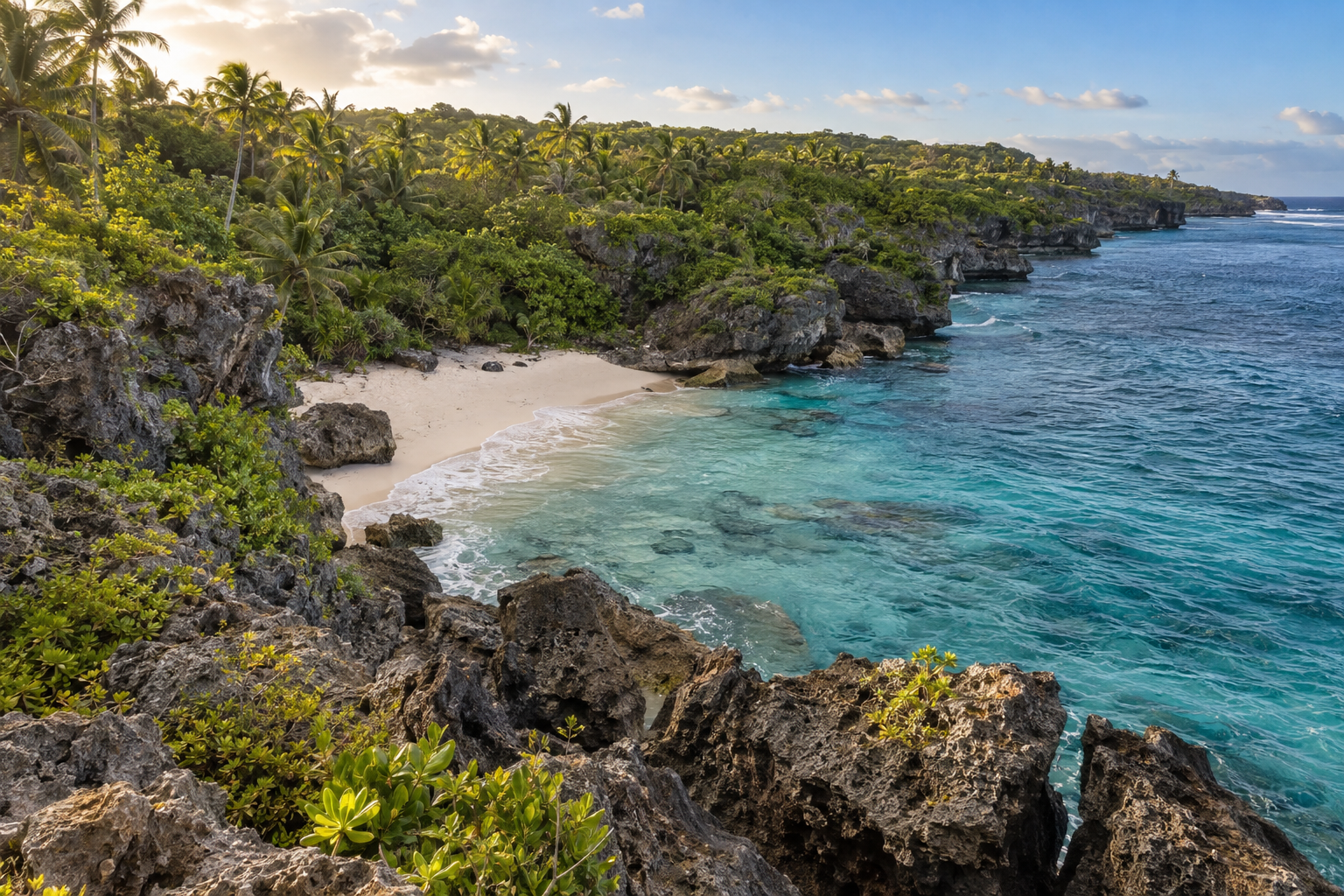
Atiu doesn’t deliver the usual tropical-island arrival scene. Instead of a necklace of overwater villas, you find a green interior, villages gathered on higher ground, and a rugged coastal belt of ancient coral. Small beaches appear between rocky outcrops; inland, roads lead past gardens and patches of coffee.
This is one of the southern Cook Islands, known locally as Enuamanu, often translated as “land of birds.” It rewards travelers who prefer a guided forest walk to a packed excursion schedule—and who don’t mind leaving an afternoon pleasantly undecided.
Why it's special
Atiu is a raised coral island. Around its volcanic interior lies makatea: uplifted reef limestone, weathered into sharp ridges, crevices, and caves. That geology gives the island a character quite different from the broad, sandy lagoon destinations often associated with the Pacific.
The standout experience is a locally guided visit to Anatakitaki Cave, home to the Atiu swiftlet, or kopeka. These small birds use echolocation to navigate the dark cave, producing audible clicks. The approach through the forest and limestone is part of the adventure, not merely a walkway to an attraction. Expect uneven footing and follow your guide’s instructions around nesting areas.
Above ground, Atiu has an important conservation story. The kākerōri, or Rarotonga monarch, was introduced here to establish a second population of this threatened bird. A knowledgeable bird guide can help you appreciate the island’s wildlife without turning the forest into a checklist.
Coffee adds another layer. Atiu has a long history of growing it, and locally arranged visits may offer a glimpse of cultivation and processing. Ask what is actually operating during your stay: this is small-scale island life, not a visitor attraction with guaranteed daily departures.
How to get there
Most international visitors arrive in the Cook Islands through Rarotonga. From there, Air Rarotonga operates domestic flights to Atiu; a direct flight takes roughly 45 minutes. Routes and operating days can change, and some itineraries may involve another island, so check the current schedule before booking accommodation.
Arrange your airport pickup with your host. Atiu is not somewhere to arrive expecting a queue of taxis or a frequent public bus service.
For exploring, ask your accommodation about bicycles, scooters, or rental vehicles. Availability is limited, and road surfaces vary. Confirm current licensing requirements before renting a scooter, wear a helmet, and avoid planning your first island drive after dark.
Leave a buffer on Rarotonga before your international departure. Weather or operational changes can affect inter-island flights, and a tight connection can turn a peaceful trip into an expensive scramble.
Best time to visit
May to October is generally the cooler, drier part of the year, making it a good starting point for planning forest walks and cave visits. Trade winds can be noticeable, particularly on exposed stretches of coast.
November to April is typically warmer and more humid, with greater rainfall and tropical cyclone risk. That does not mean constant bad weather, but flexibility matters more.
At any time of year, ask locally about sea conditions. Atiu’s small coastal swimming spots are not equivalent to a large, sheltered resort lagoon. Swell, tides, and reef conditions should determine where—or whether—you enter the water.
Rough costs
The Cook Islands uses the New Zealand dollar. These are broad planning allowances, not live quotes:
- Return flights from Rarotonga: budget roughly NZ$450–800 per person, potentially more depending on dates and routing.
- Accommodation: allow around NZ$150–300 per night for a self-contained unit or small guest property; options and inclusions vary.
- Meals: budget approximately NZ$20–40 for a prepared meal where available. Self-catering can help, although imported groceries are costly and selection is limited.
- Guided activities: allow roughly NZ$50–120 per person for an outing, depending on its length, group size, and inclusions.
Confirm prices directly and bring enough cash for local spending. Do not assume cards or cash-withdrawal facilities will meet every need.
Tips
Book the essentials ahead. Accommodation, transfers, meals, and guides often depend on a small number of people. Give hosts notice, especially about dietary requirements.
Pack for limestone, not just sand. Bring sturdy closed-toe shoes, insect repellent, a reusable water bottle, and a light rain layer. Ask your cave guide what equipment is supplied.
Let local people set the boundaries. Use guides for caves, seek permission before crossing private land, and ask before photographing residents. Dress modestly in villages, particularly around church services.
Treat hospitality as a relationship. If invited to a tumunu, a traditional gathering associated with locally brewed bush beer, follow your host’s lead and ask about etiquette and contributions.
Above all, stay several nights if you can. Atiu’s appeal is not just what you see underground or along the coast. It is having enough time to notice the island between excursions.
This article and its photo were created with AI. Prices, transport and opening times change — check the latest info and official travel advice before you go.