Grand Manan, New Brunswick · Canada · 4 November 2026
Grand Manan: A Quiet Island at the Edge of the Bay of Fundy
Off New Brunswick’s coast, Grand Manan pairs dramatic basalt cliffs with working fishing harbours, fog-softened villages, and extraordinary birdlife. Come for the lighthouse views, then stay long enough to settle into the island’s tide-led rhythm.
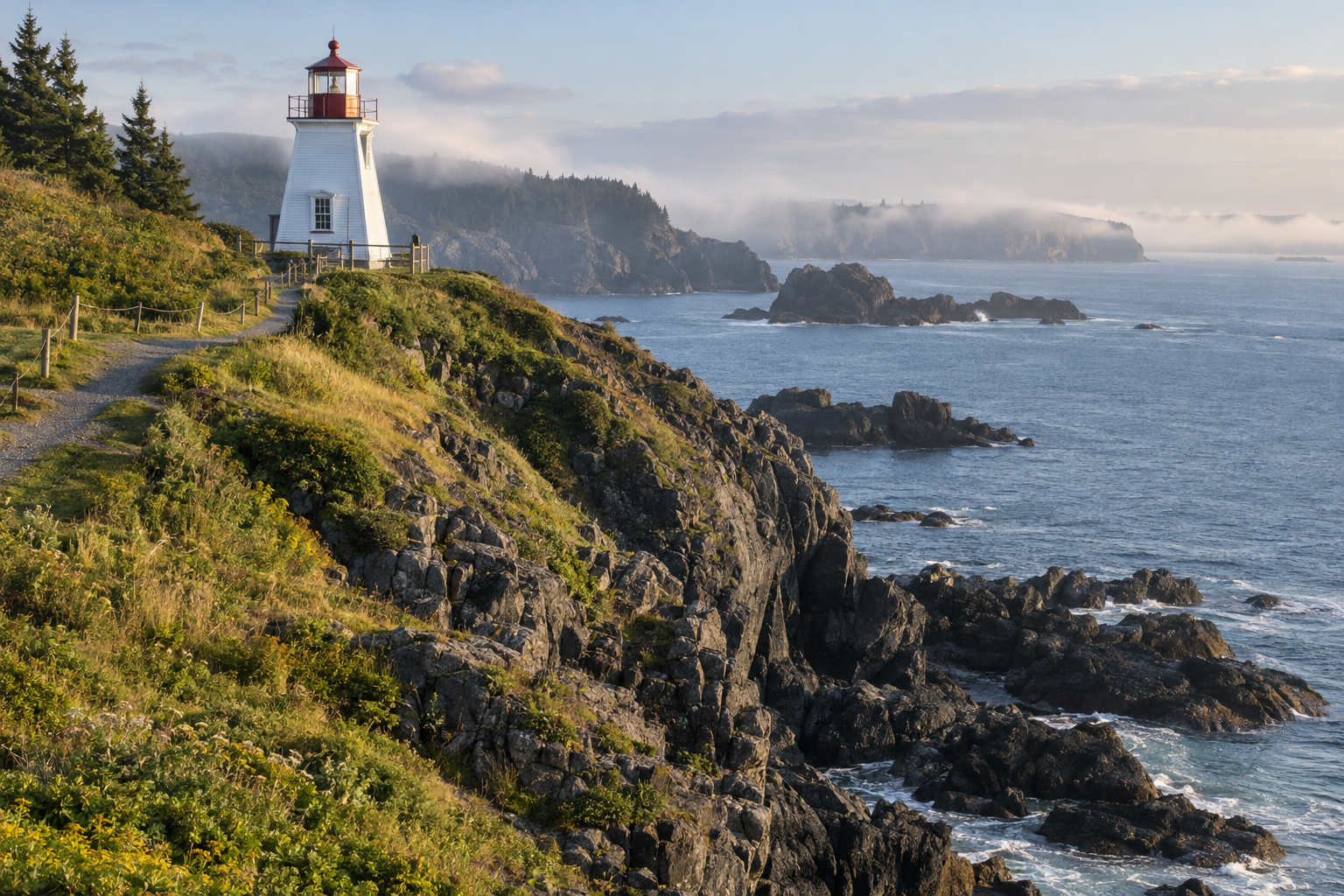
On the ferry to Grand Manan, mainland New Brunswick gradually slips away. Ahead lies an island of fishing boats, shingled houses, dark cliffs, and roads that eventually give way to the sea. When fog rolls across the Bay of Fundy, even the familiar shape of a lighthouse can feel like a discovery.
Grand Manan is no secret to birders or returning summer visitors, but it remains outside many Canadian travel itineraries. Its appeal is not a single attraction. It is the chance to spend a few days somewhere that still feels shaped more by weather and working water than by tourism.
Why it's special
The island’s two sides offer strikingly different landscapes. Along the eastern shore, villages and fishing harbours sit beside gentler stretches of coast. To the west, basalt cliffs rise above the bay, with woodland trails leading to exposed viewpoints.
Start with Swallowtail Lighthouse, near the ferry arrival point at North Head. Its white tower stands on a narrow headland reached by steps, a footbridge, and a walking path. You don’t need to climb the tower to appreciate the setting: the approach itself delivers views of rock, water, and passing boats. Access inside the lighthouse depends on seasonal opening arrangements.
Farther south, Southwest Head offers another dramatic meeting of cliffs and open water. This is a place to linger at a safe distance from the edge, watching seabirds use the wind.
Grand Manan is also known for dulse, an edible red seaweed traditionally harvested from local shores and dried. Look for locally sold bags and try a little before committing: its salty, chewy intensity is part of the experience.
Birdlife adds another reason to slow down. The island lies along important migration routes, while seasonal boat trips may visit offshore seabird colonies. Excursions toward Machias Seal Island are especially sought after for puffins, but require advance planning; landings depend on conditions and operator arrangements.
How to get there
The usual approach is the vehicle-and-passenger ferry from Blacks Harbour, New Brunswick, to North Head on Grand Manan. The crossing takes approximately 90 minutes. Blacks Harbour is roughly an hour’s drive southwest of Saint John, which has the nearest practical commercial airport for many visitors.
Check Coastal Transport’s current timetable, reservation rules, fares, and required arrival time before setting out. Summer departures can fill, and weather or operational changes can affect service. Leave breathing room between your return crossing and an onward flight.
A car is the simplest way to explore. Grand Manan is larger than it first appears, and its villages, trailheads, and southern viewpoints are spread out. Cycling is possible for confident riders, but expect hills, variable weather, and roads without generous shoulders. Don’t arrive assuming frequent public transport will connect the sights.
Best time to visit
July through early September offers the easiest first visit, with the broadest choice of accommodation, food stops, and boat excursions. Even then, sunshine is not guaranteed: Fundy fog can turn a warm mainland morning into a cool island afternoon.
Late spring and early autumn can suit walkers and birders seeking a quieter stay. Migration brings different species through the area, though what you see depends on timing and conditions.
Whale-watching excursions generally operate seasonally in summer and into early autumn, with schedules varying by operator. Wildlife sightings are never guaranteed. If a particular boat trip matters to you, check its operating season before choosing dates.
Rough costs
These are approximate planning ranges in Canadian dollars, not live quotes:
- Accommodation: Around C$140–250 per night for a modest inn, motel room, or cottage in summer; larger waterfront properties can cost more.
- Camping: Roughly C$30–55 per night for a basic site, depending on facilities and location.
- Food: About C$15–25 for a casual lunch and C$25–45 for a main course at dinner, before tax and tips.
- Boat excursions: Budget approximately C$100–200 or more per adult, depending on trip length and destination. Specialist seabird outings may cost more.
- Ferry: Check the current vehicle and passenger tariff directly, including how return travel is charged.
Walking, harbour-watching, and many coastal viewpoints keep daily spending manageable. Self-catering helps, though island grocery choices are more limited than on the mainland.
Tips
Stay at least two nights, preferably three. A day trip leaves little room for trails, changing weather, or simply stopping somewhere beautiful.
Pack layers, a waterproof jacket, and sturdy footwear. Coastal paths can be muddy or slippery, and exposed cliff edges deserve real caution.
Treat the tides seriously. The Bay of Fundy’s tidal range is substantial; check local tide times before exploring shorelines, and never assume a route will remain passable.
Book accommodation and popular excursions ahead for summer. Check restaurant opening days, and carry snacks for longer outings.
Finally, remember that this is a working island. Keep clear of fishing operations, respect private property, and ask before photographing people closely. The best visit leaves space for ordinary island life to continue around you.
This article and its photo were created with AI. Prices, transport and opening times change — check the latest info and official travel advice before you go.