Iya Valley, Tokushima Prefecture · Japan · 31 October 2026
Beyond the Vine Bridge: A Slower Journey into Japan’s Iya Valley
Deep in Shikoku’s mountains, Japan’s Iya Valley holds vine bridges, steep hillside hamlets, and old farmhouses above clear rivers. Stay beyond a quick sightseeing stop, and its quieter pleasures begin to unfold.
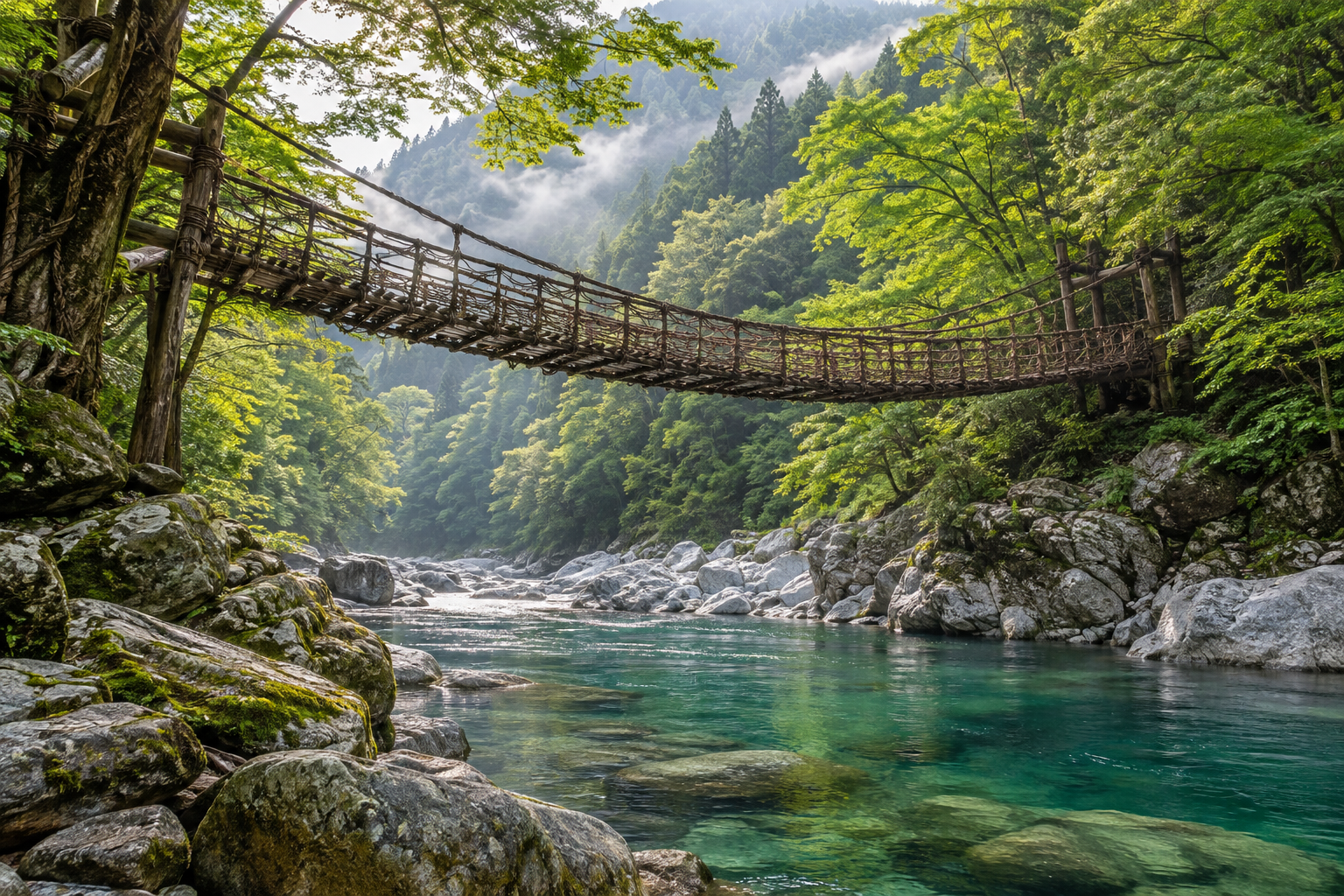
Japan’s Iya Valley is not a secret, but it remains well outside the country’s usual first-time itinerary. Tucked into the mountainous interior of Shikoku, it asks a little more of visitors: slower travel, careful transport planning, and a willingness to let the landscape set the pace.
The reward is a different kind of Japanese journey. Roads curl around forested slopes, houses occupy improbably steep patches of ground, and the river flashes green between the trees. While the best-known vine bridge draws day-trippers, the valley stretches far beyond it into places where sightseeing gives way to simply being somewhere.
Why it's special
Iya’s signature sight is the Iya Kazurabashi, a suspension bridge woven with woody vines and reinforced with concealed steel cables. Its widely spaced wooden footboards make crossing feel surprisingly adventurous: you can see the river beneath your shoes. It is a maintained visitor attraction, not an undiscovered relic, but the combination of rough vines, moving boards, and mountain water is memorable.
Farther into eastern Iya, the Oku-Iya Double Vine Bridges offer another encounter with this bridge-building tradition in a more remote forest setting. Reaching them takes time, and seasonal closures matter, but the journey also reveals how much of the valley lies beyond its headline attraction.
The human landscape is just as compelling. Around Ochiai, traditional houses and cultivated plots climb a steep mountainside. A viewpoint across the valley helps you understand the settlement’s extraordinary arrangement; walking its lanes brings the scale back to everyday life. These are people’s homes, so quiet observation is more appropriate than treating the village as an open-air museum.
Iya is also associated with stories of defeated Heike warriors seeking refuge after the twelfth-century Genpei War. Treat individual tales as local tradition rather than established fact. The terrain, however, makes the idea of a mountain refuge easy to imagine.
How to get there
The main rail gateway is Ōboke Station, on the JR Dosan Line. Limited-express trains connect it with Okayama, a major Shinkansen stop, in roughly two hours, depending on the service. Connections are also available from other Shikoku cities.
From Ōboke, buses serve parts of western Iya, including the area around Iya Kazurabashi. Services are infrequent, and eastern Iya is considerably harder to explore by public transport. Check the current timetable before booking accommodation: a short distance on the map can become a long wait in practice.
A rental car is the most flexible option for a wider visit. Collecting one in a larger transport hub can be easier than relying on local availability. Expect narrow roads, blind bends, and stretches where passing requires patience. Plan to finish unfamiliar mountain drives before dark.
Without a car, choose accommodation near a confirmed bus stop and ask whether station transfers are available. Two nights makes a more satisfying visit than a rushed day trip.
Best time to visit
Late spring and autumn are especially appealing. May brings fresh foliage, while autumn colors often develop from late October into November, varying with elevation and weather.
Summer is lush but humid, with heavy rain possible during the rainy season and typhoon-related disruption later in the year. Build flexibility into plans rather than assuming every mountain road or walking route will remain accessible.
Winter can be beautiful, but snow and ice complicate driving, and some attractions close seasonally. The deeper valley is not an ideal destination for an unprepared winter road trip. Golden Week and autumn weekends can also bring crowds to the main bridge, even when the wider area feels quiet.
Rough costs
These are planning estimates in Japanese yen, not live quotes:
- Accommodation: Around ¥8,000–¥15,000 per person for a modest inn with meals; more for upscale hot-spring stays or restored farmhouse accommodation.
- Food: Roughly ¥1,000–¥2,000 for a simple restaurant meal. Iya soba, made with buckwheat, is a local staple worth seeking out.
- Car rental: Approximately ¥7,000–¥12,000 per day for a small car, before fuel, optional coverage, and any drop-off charges.
- Attractions: Budget roughly ¥500–¥1,000 per person for each principal vine-bridge site, checking current admission prices before visiting.
Meal-inclusive lodging can be particularly useful here: evening dining choices are limited, and the next restaurant may be a substantial drive away.
Tips
Book dinner, not just a bed. Tell your host about dietary requirements in advance; small properties may need time to accommodate them.
Carry cash, download offline maps, and keep fuel comfortably topped up. Shops, ATMs, and petrol stations are not evenly distributed through the valley.
Wear shoes with good grip for bridge crossings and village lanes. Anyone uncomfortable with heights may prefer to admire the bridges from the riverbank.
Finally, leave room for an unplanned pause: a bowl of soba, mist lifting from a ridge, or the view from your inn. Iya’s strongest impression often comes between the places you came to see.
This article and its photo were created with AI. Prices, transport and opening times change — check the latest info and official travel advice before you go.