Ōkārito, West Coast · New Zealand · 25 October 2026
Ōkārito: New Zealand’s Quiet Coast of Lagoons, Forest and Mountain Light
On New Zealand’s South Island, Ōkārito is a tiny coastal settlement beside a vast tidal lagoon, where kayaking, birdlife and mountain views reward a slower kind of travel. Come for the scenery, and stay long enough to notice the tides setting the pace.
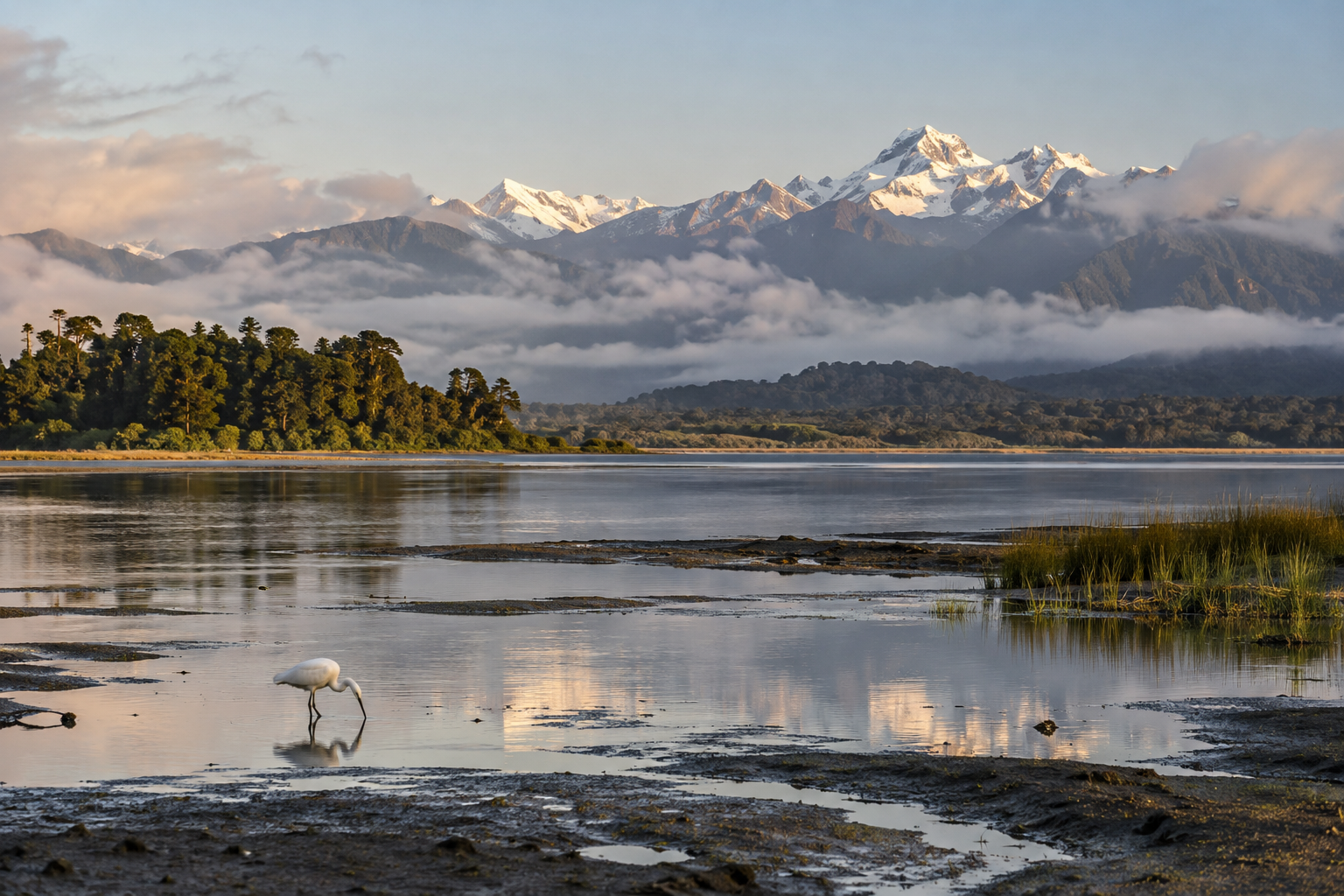
At Ōkārito, the West Coast seems to take a deep breath. Rainforest meets a broad tidal lagoon, driftwood gathers along the beach, and on clear days the Southern Alps rise beyond the water. This small settlement lies close to the well-travelled glacier country around Franz Josef, yet feels wonderfully removed from its coach stops and busy itineraries.
There is no need to arrive with an ambitious checklist. Give yourself a couple of nights, leave room for changing weather, and let a walk or paddle become the main event.
Why it's special
Ōkārito Lagoon is New Zealand’s largest unmodified coastal wetland, a shifting landscape of shallow water, mudflats and forested edges. Its appeal is less about a single viewpoint than the quiet pleasure of moving through it: a paddle dipping into still water, shorebirds feeding along an exposed bank, clouds briefly lifting from the mountains.
Kayaking is one of the best ways to experience the lagoon. Local operators offer rentals and guided outings, with routes shaped by tides, wind and experience. A guide can help you see the wetland as a living habitat rather than simply a beautiful backdrop.
Watch for kōtuku, or white herons, which feed in the area. Their only New Zealand breeding colony is in nearby Waitangiroto Nature Reserve, not in the village itself; visiting that protected colony requires an authorised guided tour. Seeing a heron around the lagoon is a possibility, not a promise.
On land, the Ōkārito Trig Walk climbs through native forest to an elevated lookout. Allow roughly 90 minutes return, with extra time for photographs and the uphill sections. Clear weather can reveal a remarkable sweep from coastline and lagoon to the Southern Alps, including Aoraki / Mount Cook.
The surrounding forest also supports rowi, the rare Ōkārito kiwi. Specialist nighttime wildlife walks offer a chance to encounter these elusive birds under careful guidance. Book ahead and keep expectations realistic: wild animals do not work to a timetable.
How to get there
Ōkārito is on the South Island’s West Coast, roughly a half-hour drive north of Franz Josef village. From State Highway 6, take the signed turnoff onto Ōkārito Road and follow it about 13 kilometres to the coast.
A car is the simplest option. Regular intercity transport serves parts of the main highway corridor, but you should not assume there is an onward public service to Ōkārito. If travelling without a vehicle, arrange your final transfer before arriving.
Hokitika, around two hours’ drive to the north in good conditions, is a useful regional gateway with an airport and rental-car options. Allow more time than a map suggests: West Coast roads invite stops, and heavy rain can cause disruption. Check current road conditions before setting out.
Best time to visit
December through March generally offers warmer weather and longer daylight hours, making it an appealing period for paddling and walking. It is also the busiest stretch of the visitor season, so reserve accommodation and guided activities in advance.
Spring and autumn can be lovely for travellers who prefer fewer people, though cooler temperatures and unsettled weather are part of the bargain. Winter brings short days and potentially crisp mountain views, but some visitor services may have reduced availability.
Rain is possible in every season. Give yourself flexibility rather than pinning everything on one afternoon. For kayaking, the local wind and tide forecast matters more than the month on the calendar.
Rough costs
These are planning estimates in New Zealand dollars, not live quotes:
- Camping: Budget approximately NZ$20–30 per adult per night at a basic campground; check current local facilities and fees.
- Private accommodation: Allow roughly NZ$160–300 or more per night for a room, cottage or holiday unit, depending on season and occupancy.
- Kayaking: Set aside around NZ$70–150 per person for a rental or guided outing; duration and inclusions vary.
- Guided kiwi watching: Budget roughly NZ$100–150 per person, confirming current rates and availability directly.
- Walking: The local Department of Conservation walking tracks are generally free to use.
Bring groceries and factor in fuel and vehicle hire separately. Ōkārito is not somewhere to rely on a full range of shops or restaurants.
Tips
Pack a waterproof jacket, warm layers, insect repellent and shoes suitable for wet tracks. Sandflies can be persistent, especially when you stop moving.
Stock up in Franz Josef before arrival, and download maps and booking details rather than depending on mobile reception.
Treat the lagoon as tidal water, not a sheltered swimming pool. Follow your operator’s advice, wear a properly fitted buoyancy aid and avoid disturbing feeding or nesting birds.
The exposed beach is best approached as a place for walking and watching the sea, not an assumed safe swimming spot. Keep well back from rough surf.
Finally, remember that this is a small residential community. Park considerately, respect private property and keep nighttime noise low. Ōkārito’s greatest luxury is its quiet; help leave it that way.
This article and its photo were created with AI. Prices, transport and opening times change — check the latest info and official travel advice before you go.