Piódão · Portugal · 1 November 2026
Piódão, Portugal: A Schist Village Folded into the Mountains
Hidden in central Portugal’s Serra do Açor, Piódão is a mountainside village of dark stone houses, blue-painted doors, and winding lanes. Come for the architecture, then stay for streamside walks and the quiet pleasures of an unhurried mountain escape.
Why it's special
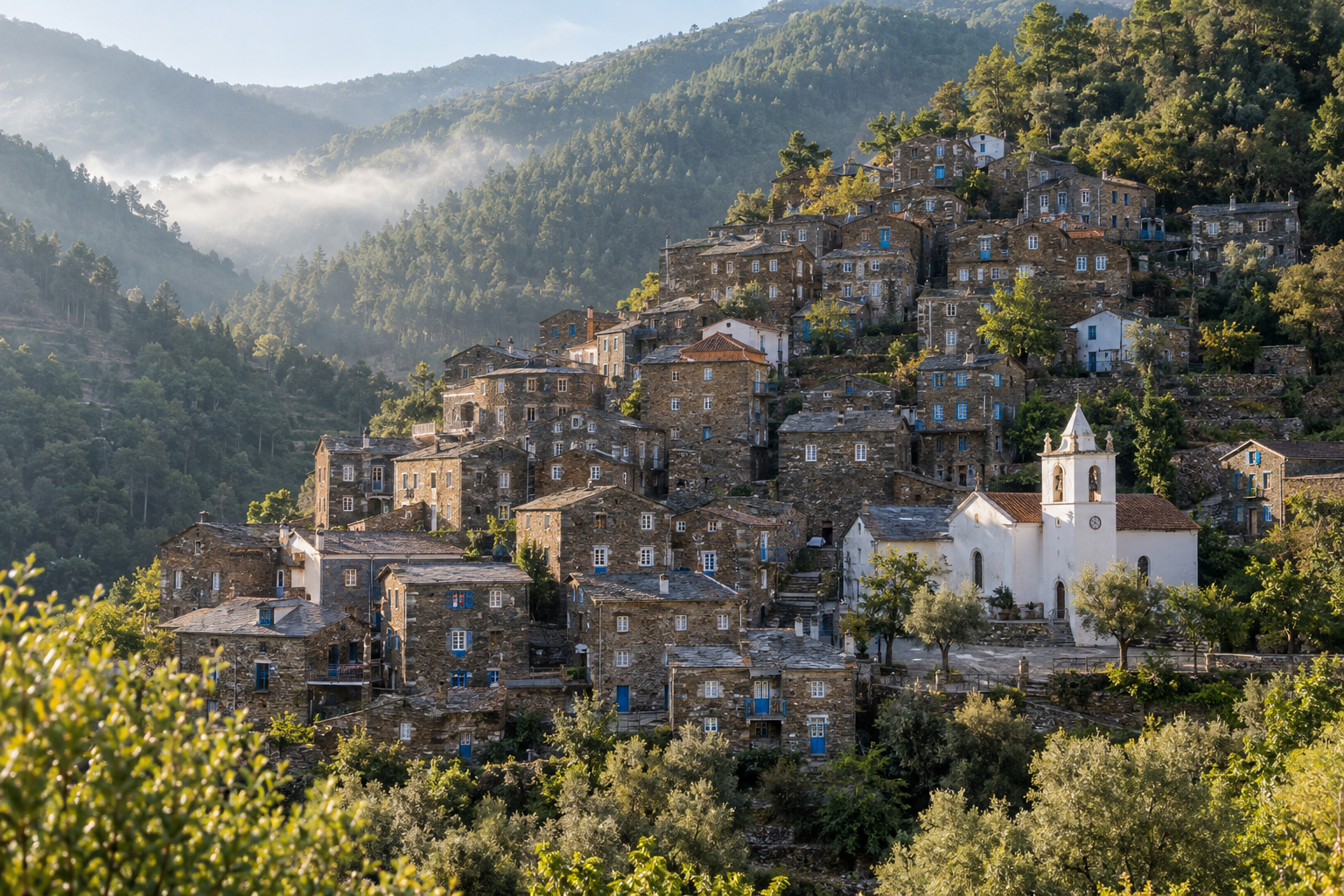
Piódão reveals itself gradually: a fold in the mountains, a cluster of slate-colored roofs, then an entire village climbing the slope like an amphitheater. Set in Portugal’s Serra do Açor, it feels far removed from the country’s crowded coastal circuits, although it is hardly a secret to Portuguese weekend travelers.
Its distinctive material is schist, the layered stone used for walls and much of the village’s traditional construction. Houses sit close together along steep, narrow lanes, their dark surfaces brightened by blue-painted doors and window frames. Against all that stone, the whitewashed parish church, dedicated to Our Lady of the Conception, stands out dramatically.
The pleasure here is not a long checklist of sights. It is the way a lane turns into steps, the sound of water, and the changing light across the opposite hillside. Piódão belongs to the Historic Villages of Portugal network, but it remains a lived-in settlement rather than an open-air museum.
Nearby Foz d’Égua adds another reason to linger. Its stone houses, small bridges, and meeting streams make a lovely excursion, especially when conditions suit a walk. Visit both places slowly: their appeal lies in the landscape and scale, not in rushing between photographic viewpoints.
How to get there
Piódão is in the municipality of Arganil, inland from Coimbra. For most visitors, a rental car is the simplest option. Allow roughly two hours from Coimbra, depending on your route and the weather; Lisbon and Porto are longer starting points, so this works better as an overnight stop than a hurried city day trip.
The final approach involves winding mountain roads. Distances on a map can be misleading, and the drive deserves daylight, patience, and occasional stops only where there is a proper place to pull over. In fog or heavy rain, allow extra time.
Public transport is limited and is not a straightforward turn-up-and-go option. If you are traveling without a car, check current connections toward Arganil and arrange the onward journey with a local taxi or your accommodation before setting out. Confirm the return journey too.
Use designated parking near the village entrance and explore on foot. The historic lanes are narrow and stepped, so wheeled luggage is inconvenient; an overnight bag is much easier to manage.
Best time to visit
Late spring and early autumn offer a good balance of comfortable walking temperatures and quieter lanes. In spring, the surrounding hills can be especially green; in autumn, softer light brings out the textures of the stone.
July and August bring warmer weather and more visitors, particularly on weekends. Arriving early or staying overnight lets you experience the village before or after the busiest sightseeing hours. Mountain evenings can still feel cool, so pack a layer even in summer.
Winter can be atmospheric, but expect cold, wet conditions and potentially slippery paving. Check the forecast and accommodation availability before committing. During hot, dry periods, consult local wildfire warnings and any restrictions affecting trails or access roads.
Rough costs
These are broad planning estimates in euros, not live quotes. Prices vary with the season, weekends, and how far ahead you book.
- Accommodation: Budget around €70–€130 per night for a double room in a guesthouse or rural lodging in or around Piódão. Higher-end stays and peak dates can cost more.
- Food: A simple lunch may cost approximately €12–€20 per person, while a fuller dinner with a drink might fall around €20–€35.
- Coffee and snacks: Allow roughly €3–€6 for a coffee and something small to eat.
- Car rental: A small car might cost €30–€70 per day outside peak periods, before fuel, tolls, insurance extras, and parking where applicable.
- Sightseeing: Wandering the village has no admission charge. Any museum visits, guided activities, or other paid attractions are additional.
For two people sharing a room and car, roughly €90–€150 per person per day is a useful starting budget. Solo travelers will generally pay more per person.
Tips
Wear shoes with good grip. Piódão’s gradients and uneven paving are part of its character, but they can be challenging for anyone with limited mobility. Ask accommodation providers about steps and vehicle access before booking.
If walking toward Foz d’Égua, check the current route, distance, and trail conditions locally. Carry water, sun protection, and an offline map; a scenic mountain path should not be treated as a casual pavement stroll.
Reserve dinner when staying overnight, especially outside the busiest season, when opening hours may be limited. Look for regional mountain cooking, including goat dishes when available, and ask what is being prepared that day.
Finally, remember that the blue doors belong to people. Keep voices low, avoid blocking entrances, and ask before photographing residents. The best souvenir is the feeling of having spent time somewhere—not simply having collected its prettiest angle.
This article and its photo were created with AI. Prices, transport and opening times change — check the latest info and official travel advice before you go.