Santa Cruz de Mompox, Bolívar · Colombia · 7 November 2026
Mompox, Colombia: Slow Days on a Quiet Branch of the Magdalena
On a quiet branch of Colombia’s Magdalena River, Mompox rewards travelers with shaded courtyards, delicate silverwork, and evenings spent beside the water. Its beautifully preserved historic center feels best explored without a packed itinerary.
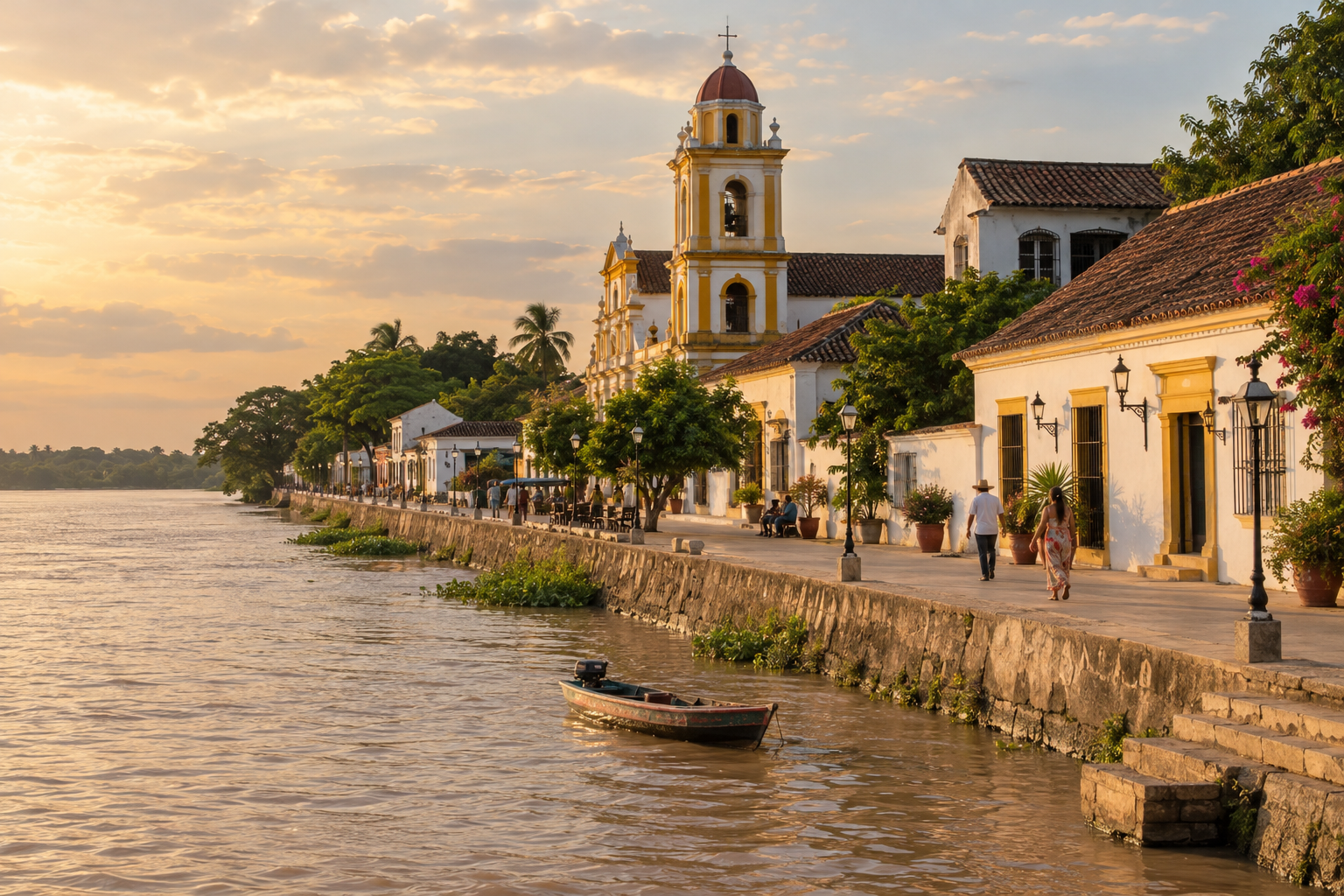
Mompox is a place for adjusting your pace. Arrive in the afternoon and the heat may persuade you to do very little: find a shaded chair, order something cold, and watch the river slide past. Later, when the light softens, the waterfront becomes a place for strolling, conversation, and dinner outdoors.
Officially Santa Cruz de Mompox, and also commonly spelled Mompós, this small Colombian town sits on the Mompox branch of the Magdalena River. It is hardly unknown within Colombia, but international visitors often overlook it in favor of Cartagena. Give it two or three nights, and its appeal becomes clear.
Why it's special
Mompox prospered as a trading settlement when the Magdalena was a principal route between the Caribbean coast and Colombia’s interior. As navigation and commerce shifted toward another river channel, the town lost much of its commercial importance. Its historic architecture, however, survived remarkably well; UNESCO inscribed the historic center on its World Heritage List in 1995.
The pleasure here lies in the streetscape rather than a single headline attraction. Whitewashed walls, deep doorways, tiled roofs, and iron window grilles frame glimpses of leafy courtyards. Along the river, buildings face the water as though it were still the town’s main avenue.
Look for the Church of Santa Bárbara, recognizable by its distinctive bell tower, then leave time for the smaller streets between the churches and plazas. Some historic houses now operate as hotels, making an overnight stay part of the architectural experience.
Mompox also has a living tradition of filigree jewelry. In local workshops, artisans shape fine gold or silver threads into intricate pieces. Ask before watching or photographing someone at work, and buy directly when possible.
For a different view of the region, arrange a boat outing into the surrounding wetlands, often including the Ciénaga de Pijiño. Depending on water levels and conditions, you may see herons, kingfishers, and other waterbirds among the channels and vegetation.
How to get there
Mompox takes some effort to reach, though road bridges have made access considerably easier than its old reputation suggests.
From Cartagena, road travel commonly takes around six to eight hours, sometimes longer with traffic, stops, or poor road conditions. Bus and shared-transfer arrangements vary, so confirm the current departure point, schedule, and whether the service is direct before booking.
You can also approach from Santa Marta or Barranquilla, but do not assume every service runs daily or without a change. An accommodation host in Mompox can often help identify the most practical current connection.
If you are flying into Colombia, a larger city such as Cartagena is a straightforward gateway for continuing overland. Avoid building a tight same-day connection between a domestic road journey and an international flight.
Once in the historic center, walking is the simplest way to explore. For luggage or midday arrivals, use a local taxi or other locally available transport and agree on the fare first.
Best time to visit
December through March is generally the drier period, making it a useful starting point for planning. Mompox is hot throughout the year, however: early mornings and late afternoons are much more comfortable for walking than midday.
Rainier periods bring greener surroundings and changing wetland conditions. A boat trip can still be rewarding, but routes and wildlife sightings depend on the river, weather, and season.
Holy Week is especially significant here, with longstanding religious traditions and processions. It is an atmospheric time to visit, but not a quiet or inexpensive one. Reserve well ahead for Easter and other major events; choose ordinary weekdays if solitude matters more than festivities.
Rough costs
These are broad planning estimates in Colombian pesos, not live quotes. Holiday demand, room quality, and group size can change prices substantially.
- Simple private room: roughly COP 100,000–180,000 per night.
- Comfortable heritage-style accommodation: approximately COP 220,000–450,000 or more per night.
- Casual local meal: around COP 20,000–40,000 per person; more elaborate waterfront dining costs extra.
- Overland travel from Cartagena: budget roughly COP 100,000–180,000 per person, depending on the service.
- Wetland boat excursion: allow approximately COP 70,000–150,000 per person on a shared outing. Private boats can cost substantially more overall.
Check what excursions include, particularly transfers, drinking water, and guide services. Carry some cash for small purchases and workshops.
Tips
Build your day around the heat. Walk early, retreat after lunch, and head out again toward sunset. A room with reliable air-conditioning can be worth the extra cost.
Bring mosquito repellent, sunscreen, a hat, and refillable drinking water. For boat trips, check that suitable life jackets are provided and avoid operators who encourage feeding or handling wildlife.
Dress respectfully when entering churches, and ask before photographing residents or private courtyards. Mompox is a lived-in town, not an open-air museum.
Above all, leave an evening unplanned. A riverside table and time to linger are among the best reasons to come.
This article and its photo were created with AI. Prices, transport and opening times change — check the latest info and official travel advice before you go.