Vevčani · North Macedonia · 16 October 2026
Vevčani: North Macedonia’s Mountain Village of Springs and Stories
Above Lake Ohrid’s busy shores, Vevčani offers rushing mountain springs, old stone houses, and a village culture with a mischievous streak. Come for a gentle woodland walk, then stay long enough for a leisurely lunch and an afternoon without an itinerary.
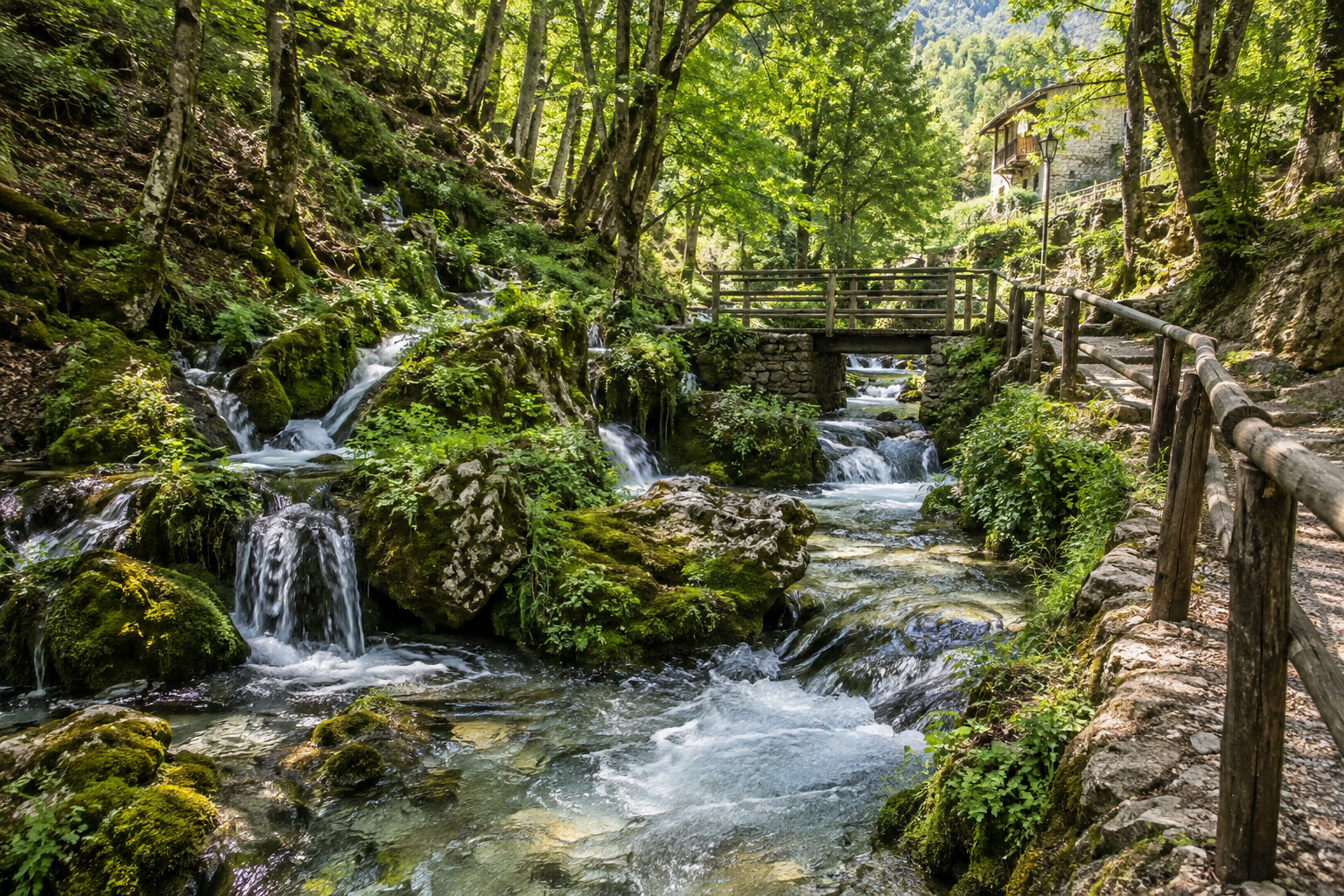
Most visitors to southwestern North Macedonia head straight for Lake Ohrid. That makes sense: the lake deserves its reputation. But a short journey inland brings you to Vevčani, a village on the eastern slopes of the Jablanica Mountains, where water runs through shaded woodland and lanes climb between traditional houses.
Around 14 kilometers northwest of Struga, Vevčani is an easy excursion from the lakeside. It is also worth considering for an overnight stay: once you stop treating it as a quick detour, its quieter pleasures become the main attraction.
Why it's special
The Vevčani Springs are the village’s natural centerpiece. Water emerges from the limestone landscape and gathers into clear, lively channels beneath the trees. Paths and small footbridges let you explore without committing to a mountain hike; the sound of moving water accompanies much of the walk.
This is an intimate landscape rather than a single grand viewpoint. Ferns, mossy stones, wooden railings, and shifting patches of sunlight reward a slow pace. In warmer weather, the woodland offers welcome shade after the exposed streets around the lake.
The village itself deserves equal attention. Traditional houses combine stone lower levels with lighter upper stories, while narrow lanes reveal courtyards, balconies, and views toward the surrounding slopes. These are lived-in streets, not an open-air museum, so the pleasure lies in observing everyday details without intruding.
Vevčani also has a famously independent spirit. Its symbolic “republic,” associated with local resistance to a proposed diversion of spring water in 1987, survives in playful souvenirs and village storytelling. It is not an independent country, but that distinction has hardly diminished the local sense of identity.
Then there is the Vevčani Carnival, held around January 13–14 for the Orthodox New Year. Elaborate masks, satire, and unruly street performances transform the atmosphere completely. The quiet village and the carnival village are two very different experiences.
How to get there
Struga is the most practical nearby gateway. From there, a taxi or rental car makes the final journey straightforward, usually taking roughly 20–30 minutes depending on traffic and your destination within the village.
Local buses or minibuses may connect Struga and Vevčani, but frequencies and departure arrangements can change. Ask your accommodation or check locally rather than planning around an old online timetable, especially for the return journey.
Ohrid is another convenient base. Travel via Struga, or arrange a direct taxi with the fare agreed beforehand. Ohrid’s airport is the closest airport, although its routes can be seasonal; Skopje offers another entry point, followed by an intercity journey toward Struga.
Once in Vevčani, explore on foot. Expect hills, uneven paving, and potentially slippery surfaces near the springs. Drivers should use appropriate parking rather than attempting to squeeze through every village lane.
Best time to visit
May, June, September, and early October offer a good balance of comfortable walking weather and a relaxed atmosphere. Spring brings fresh greenery and often lively water flow, although conditions depend on recent rain and snowmelt.
July and August work well too, particularly if you want to combine the village with swimming in Lake Ohrid. Visit the springs early or later in the afternoon, and remember that weekends can attract local day-trippers.
January is for travelers specifically interested in the carnival. Book accommodation and transport ahead, expect cold weather, and understand that some performances are deliberately provocative rather than family-friendly folklore displays.
Rough costs
Vevčani can be an affordable addition to a North Macedonia itinerary. The following are broad planning estimates, not live quotes:
- Simple restaurant meal: approximately €7–12 per person; more for a substantial meat dish, multiple courses, or drinks.
- Coffee: roughly €1–2.50.
- Double room in a modest guesthouse: around €30–60 per night, depending on availability and season.
- Taxi from Struga: budget approximately €10–20 each way, but confirm the price locally before setting off.
North Macedonia uses the Macedonian denar. Carry some local cash for small businesses and any entrance or parking charges. Carnival dates can change the usual accommodation picture, so check prices before committing.
Tips
Allow at least half a day. A rushed stop at the springs misses the village lanes and the opportunity for an unhurried meal. Ask what is freshly prepared; bean dishes, salads, local cheeses, and savory pies are useful starting points, though menus vary.
Wear shoes with grip, stay on established paths, and do not assume that clear spring water is suitable for drinking unless a source is explicitly designated as potable.
Ask before photographing residents, private courtyards, or carnival participants at close range. For longer mountain walks, seek current local advice about routes and weather: the easy spring paths should not be mistaken for a guide to the higher Jablanica terrain.
Above all, leave room to linger. Vevčani’s appeal is not a checklist of sights, but the chance to spend a few hours somewhere with a strong character of its own.
This article and its photo were created with AI. Prices, transport and opening times change — check the latest info and official travel advice before you go.